AI SEO in 2026: How to Optimize Your Website for Google AI Overviews and ChatGPT Search
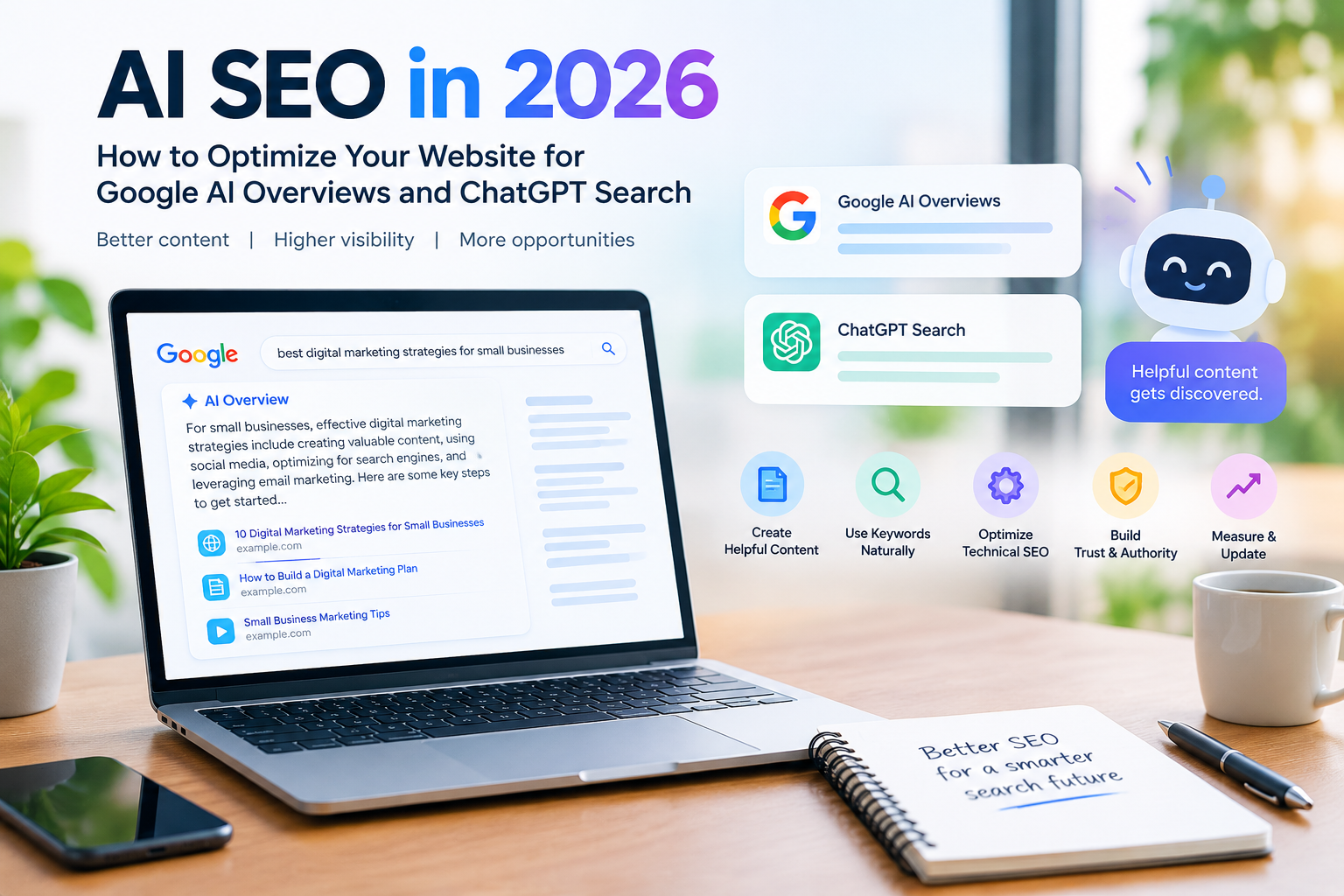
Search engine optimization (SEO) is changing as people increasingly use AI-powered tools to find information online. Alongside traditional Google searches, users can discover answers through Google AI Overviews, AI Mode, and ChatGPT Search.
For businesses, bloggers, and digital marketers, this shift creates a new opportunity: making website content useful and accessible to both traditional search engines and AI-powered search experiences.
In this guide, you will learn what AI SEO is, why it matters, and how to optimize your website for better online visibility.
What Is AI SEO?
AI SEO is the practice of improving website content and technical performance so that it can be discovered, understood, and potentially surfaced in AI-powered search experiences.
Traditional SEO focuses on helping web pages appear in search results. AI SEO builds on those same fundamentals while considering how AI-powered search tools find information and present answers with supporting links.
For example, someone searching for “best digital marketing strategies for small businesses” might see a traditional list of websites or an AI-generated summary with links to relevant sources.
Generative Engine Optimization (GEO) and Answer Engine Optimization (AEO) are related terms used to describe efforts to improve visibility in these AI-driven experiences. However, strong SEO fundamentals remain essential.
Why Is AI SEO Important in 2026?
People are exploring new ways to research topics, compare products, and find solutions online. AI-powered search experiences can summarize information and provide links for further reading.
This means businesses should think beyond rankings alone and consider how effectively their content answers real customer questions.
Here are three reasons AI SEO deserves attention:
- Changing search behavior: Users may ask detailed questions instead of entering short keywords.
- New discovery opportunities: Useful content may be surfaced through AI-generated answers and supporting links.
- Greater focus on trust: Accurate, original, and helpful information gives readers a stronger reason to trust your brand.
However, appearing in an AI-generated answer is not guaranteed. The goal should be to create valuable content that serves readers, whether they discover it through traditional search or AI tools.
7 Practical Ways to Optimize Your Website for AI Search
1. Create Helpful, People-First Content
Start by answering your audience’s questions clearly. Avoid writing articles only to insert keywords or increase word count.
Understand what readers want to know, explain the topic in simple language, and provide practical solutions.
For example, instead of writing a general article about digital marketing, create a focused guide explaining how a small business can build a marketing strategy with a limited budget.
Original insights, relevant examples, and actionable advice make your content more useful.
2. Use Relevant Keywords Naturally
Keywords help you understand what your audience is searching for. Choose one primary keyword for each article and include related terms where they fit naturally.
For this topic, the primary keyword is AI SEO trends 2026. Related keywords include:
- AI SEO
- Generative Engine Optimization
- AI search optimization
- Google AI Overviews
- ChatGPT Search optimization
Use the primary keyword in your title, introduction, relevant headings, and meta description where appropriate. Avoid keyword stuffing because it makes content harder to read.
3. Answer Questions Directly
Readers appreciate quick, clear answers. AI-powered search experiences also aim to identify relevant information from web content.
Use descriptive headings and provide a concise answer before expanding with examples or explanations.
For example:
How can you optimize a website for AI search?
Create helpful content, make important information accessible to search engines, use clear headings, strengthen internal links, and keep information accurate and up to date.
This structure improves readability without guaranteeing that your content will appear in an AI-generated response.
4. Demonstrate Experience and Build Trust
Trust matters in SEO. Support important claims with reliable sources, explain your recommendations, and include original examples or case studies when available.
Show readers who created the content and why they are qualified to discuss the topic. Keep author biographies, contact details, and relevant business information accurate.
Never invent customer testimonials, statistics, research findings, or results. Credible content is more valuable than exaggerated claims.
5. Improve Your Website’s Technical SEO
Even excellent content needs to be accessible to search engines.
Check that your website:
- Allows appropriate search engine crawling.
- Has important pages indexed where intended.
- Works well on mobile devices.
- Loads efficiently and provides a good page experience.
- Uses descriptive page titles and logical headings.
- Includes relevant internal links.
- Presents important information as accessible text.
Google states that its AI search features rely on existing search fundamentals and do not require special AI-only markup. Follow established SEO best practices rather than relying on supposed shortcuts.
6. Use Structured Data Correctly
Structured data helps search engines interpret specific information about a page, product, organization, or other supported content type.
Use relevant schema markup when appropriate, and ensure it accurately matches the information visible to readers.
Do not add unnecessary schema or assume that structured data guarantees inclusion in AI Overviews, featured snippets, or rich search results.
7. Measure Performance and Keep Content Updated
SEO requires ongoing improvement. Review performance regularly and identify which pages attract relevant visitors.
Monitor organic clicks, impressions, search queries, conversions, and engagement using tools such as Google Search Console and your website analytics platform.
You can also review referral traffic and brand mentions associated with AI search where reliable reporting is available.
Update outdated information, improve weak sections, and add new evidence when needed. Measure business outcomes rather than focusing only on rankings or AI mentions.
Common AI SEO Mistakes to Avoid
Avoid these common mistakes when optimizing for AI search:
- Publishing large volumes of generic, repetitive AI-generated articles.
- Copying competitors without adding original value.
- Using keywords unnaturally.
- Making unsupported claims about ranking factors.
- Ignoring technical SEO and website accessibility.
- Treating AI visibility as a guaranteed source of traffic.
AI tools can support research and editing, but human review remains important for accuracy, originality, and usefulness.
Frequently Asked Questions
Is AI SEO different from traditional SEO?
AI SEO builds on traditional SEO by considering AI-powered search experiences. Helpful content, technical accessibility, relevance, and trust remain important.
How do I rank in Google AI Overviews?
There is no guaranteed method. Follow Google’s SEO guidelines, create useful and reliable content, make pages accessible for crawling and indexing, and answer relevant questions clearly.
Does ChatGPT Search use website content?
ChatGPT Search can surface public websites and provide links to relevant sources. Website owners should review OpenAI’s publisher guidance and ensure the relevant search crawler is not blocked if they want their content to be discoverable.
Can AI-generated content rank on Google?
AI-assisted content can be useful when it provides accurate, relevant, original value. Publishing large amounts of low-value content solely to manipulate rankings may violate Google’s spam policies.
Conclusion
AI SEO in 2026 is not about finding a secret formula to appear in AI-generated answers. It is about building a website that provides clear, trustworthy, relevant, and useful information.
Focus on understanding search intent, using keywords naturally, improving technical SEO, demonstrating credibility, and keeping content updated. These practices support your broader search visibility while helping real people find the answers they need.
Start today: Choose one important blog post on your website, improve its answers and examples, check its technical SEO, and measure its performance over time.