WhatsApp Marketing in India: A Complete Guide to Business Growth in 2026
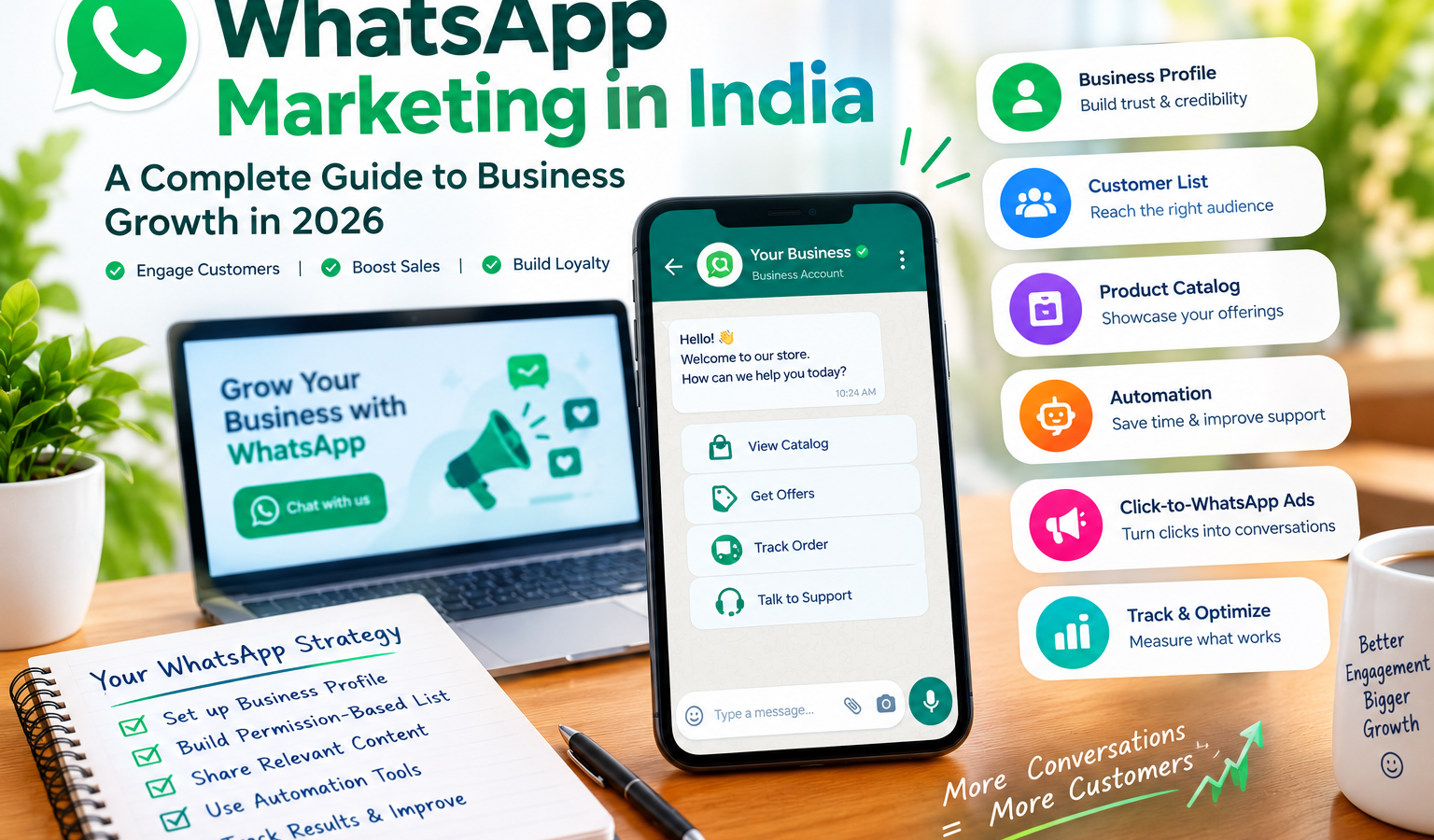
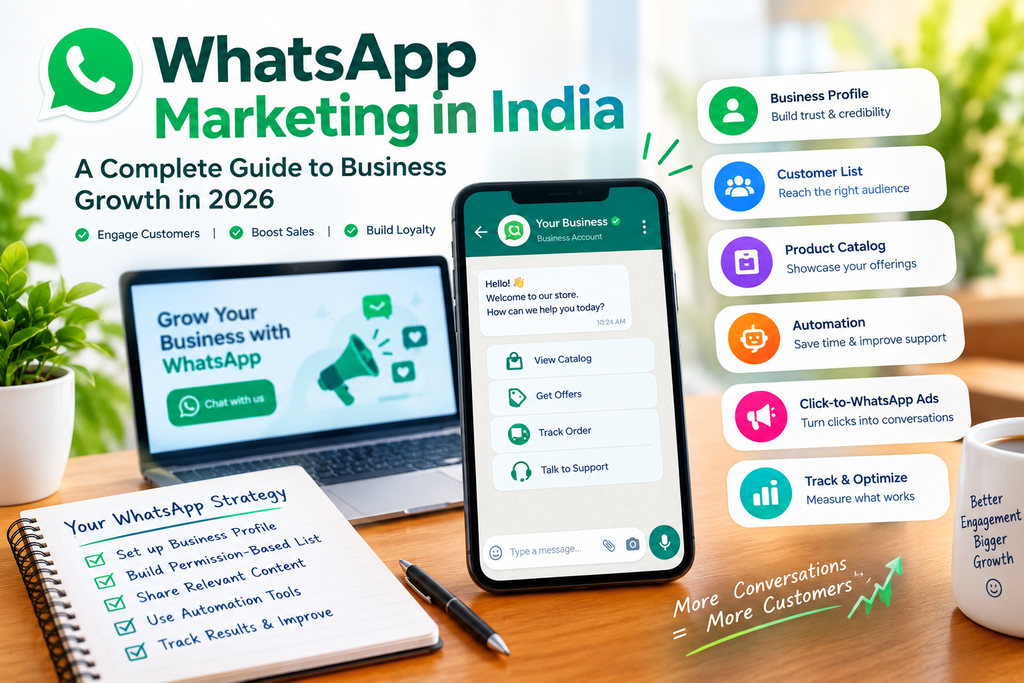
Meta description: Learn how to use WhatsApp marketing in India to connect with customers, promote products, generate leads, automate replies, and grow your business in 2026.
Suggested URL slug: whatsapp-marketing-in-india
Introduction
Want to reach more customers, build trust, and increase sales without making marketing complicated? WhatsApp marketing in India can help your business start meaningful conversations with potential and existing customers.
From local shops and online stores to service providers and startups, businesses can use WhatsApp to answer questions, share product details, send updates, and provide customer support. Its value lies not simply in sending messages, but in making it easier for customers to interact with your business.
In this guide, you will learn how WhatsApp marketing works, which strategies to use, and how to get started with the right tools.
What Is WhatsApp Marketing?
WhatsApp marketing is the use of WhatsApp to communicate with customers, promote products or services, share useful information, and support sales.
Businesses can use the WhatsApp Business app for everyday customer communication or explore the WhatsApp Business Platform for messaging at a larger scale.
For example, a clothing store can share a new collection, a restaurant can respond to booking enquiries, and a digital marketing agency can answer questions from potential clients.
The goal is to provide helpful, timely communication that encourages customers to take the next step.
Why Is WhatsApp Marketing Important for Indian Businesses?
WhatsApp marketing offers several practical benefits for businesses in India:
- Direct communication: Answer customer questions through conversations.
- Better customer service: Share updates and respond to common enquiries.
- Product promotion: Showcase products, services, and special offers.
- Lead generation: Turn website visitors and social media audiences into enquiries.
- Customer retention: Stay connected with customers who choose to receive updates.
- Time savings: Use available automation and quick replies to handle routine questions.
However, results depend on your audience, message quality, offer, and follow-up process. WhatsApp is a communication channel, not a guarantee of sales.
7 WhatsApp Marketing Strategies to Grow Your Business
1. Create a Professional WhatsApp Business Profile
Start by setting up a complete WhatsApp Business profile. Add your business name, logo, description, operating hours, contact details, and website where applicable.
A clear profile helps customers understand what you offer and how to contact you. Keep the information accurate and consistent with your other business channels.
2. Build a Permission-Based Customer List
A relevant audience is more valuable than a large contact list. Invite customers to opt in through your website, checkout page, social media profiles, QR codes, or in-store interactions.
Explain what kinds of messages they can expect, such as order updates, new product announcements, or occasional offers. Respect requests to stop receiving messages.
Avoid buying contact lists or sending unsolicited promotional messages. Unwanted communication can damage customer trust and put your account at risk.
3. Use Product Catalogs to Showcase Your Offers
The WhatsApp Business app allows eligible businesses to create a catalog of products or services. Add clear images, useful descriptions, and accurate details to help customers explore your offerings.
For example, a bakery can display cakes and gift boxes, while a beauty salon can list treatments and packages.
Share relevant catalog items during conversations instead of sending long descriptions manually. Make it easy for customers to ask questions or place an enquiry.
4. Send Useful and Relevant Marketing Messages
Promotional messages should offer genuine value. You could share a seasonal collection, a limited-time offer, an event announcement, or a useful product recommendation.
Keep messages short and specific. Explain the benefit and include a clear next step, such as “View the collection” or “Reply to book an appointment.”
Avoid messaging customers too frequently. Choose a reasonable schedule based on their preferences and engagement.
5. Use Automation and Quick Replies
Automation can help businesses respond faster and manage repetitive questions. The WhatsApp Business app includes features such as greeting messages, away messages, and quick replies.
For larger operations, the WhatsApp Business Platform offers additional messaging and integration options. Eligible Indian businesses may also have access to Business AI features, subject to availability and eligibility.
Use automation for routine questions, but provide a clear way for customers to reach a person when they need personal assistance.
6. Run Click-to-WhatsApp Ads
Businesses can use ads on Facebook and Instagram that direct interested people into a WhatsApp conversation.
This approach can help generate enquiries about products, services, appointments, or quotations. For example, a coaching centre could run an ad inviting prospective students to ask about course schedules.
Make sure the ad promise matches the conversation that follows. Respond promptly and have a clear process for turning enquiries into customers.
7. Measure Results and Improve Your Approach
Track useful metrics to understand whether your WhatsApp marketing is working. Depending on your setup, these may include enquiries, response time, qualified leads, bookings, purchases, and repeat orders.
Test different offers and message formats. Keep what helps customers and remove what does not.
Do not judge success by message volume alone. Focus on meaningful conversations and business outcomes.
Common WhatsApp Marketing Mistakes to Avoid
Avoid these mistakes when planning your campaigns:
- Sending promotional messages without appropriate permission.
- Sharing too many messages or irrelevant offers.
- Using unclear product descriptions or outdated prices.
- Ignoring customer questions after generating leads.
- Relying entirely on automation for complex issues.
- Failing to track enquiries, conversions, and customer feedback.
Follow WhatsApp’s current business messaging policies and applicable Indian laws. Platform rules and feature availability can change, so review the latest requirements before launching campaigns.
How to Get Started With WhatsApp Marketing
If you are new to WhatsApp marketing, begin with these simple steps:
- Set up and complete your WhatsApp Business profile.
- Identify the customers you want to reach.
- Create a clear opt-in process.
- Add your main products or services to a catalog, if suitable.
- Prepare helpful replies to common questions.
- Promote your WhatsApp contact link through relevant channels.
- Review results and improve your messages over time.
Start with a manageable process, then consider more advanced tools as your customer conversations grow.
Frequently Asked Questions
Is WhatsApp marketing free in India?
The WhatsApp Business app offers tools that businesses can use without a standard subscription fee, although mobile data and some optional or paid features may involve costs. The WhatsApp Business Platform has its own pricing and implementation considerations.
Is WhatsApp marketing suitable for small businesses?
Yes. Local retailers, salons, restaurants, consultants, and online sellers can use WhatsApp to answer enquiries, share product information, and support customers.
Can WhatsApp marketing help generate leads?
Yes. Businesses can encourage people to start a conversation through websites, QR codes, social media, and click-to-WhatsApp ads. Lead quality depends on the offer, audience, and follow-up process.
Conclusion
WhatsApp marketing in India can help businesses build stronger customer relationships, improve communication, and create more opportunities for sales. The most effective approach combines relevant messages, customer permission, helpful service, and consistent measurement.
Start with a professional profile, build a permission-based audience, and share content that solves real customer needs. As your business grows, explore suitable automation and advertising options.
Remember: successful WhatsApp marketing is not about sending more messages. It is about starting better conversations.