Google Ads in 2026: AI Automation, PPC Strategies and Campaign Optimization
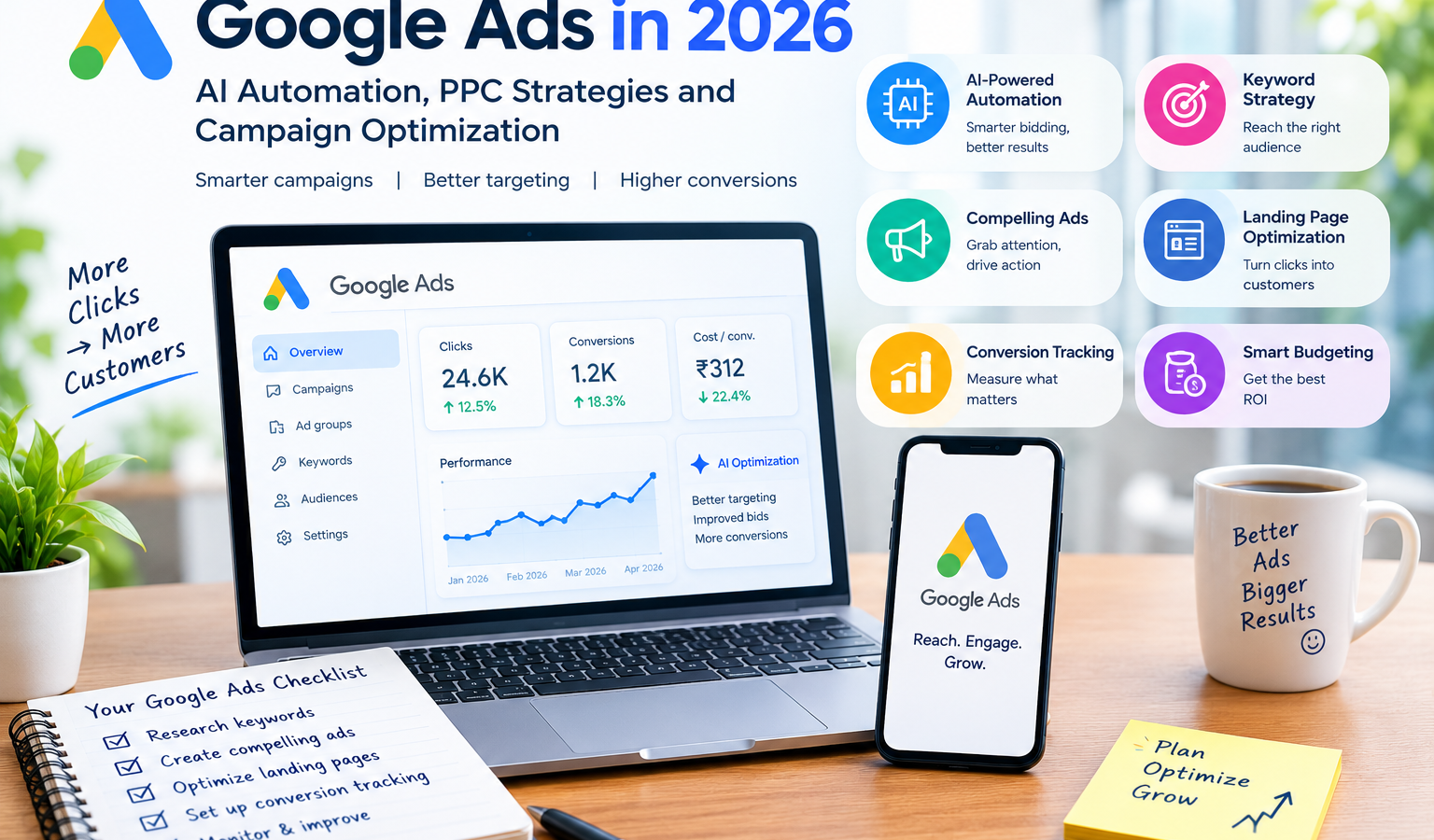
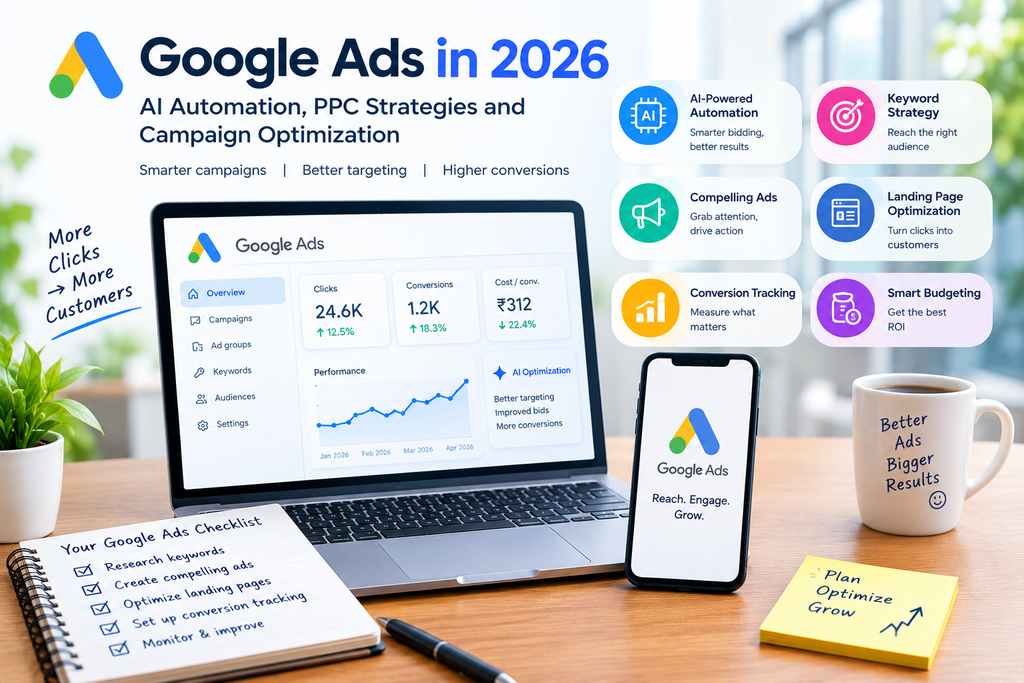
Are you spending money on online advertising but struggling to generate quality leads or sales? A well-planned Google Ads campaign can help your business reach potential customers when they are actively searching for products or services.
In 2026, artificial intelligence (AI) is playing an increasingly important role in paid advertising. From automated bidding to AI-powered ad creation, Google Ads offers tools that can help businesses manage campaigns and discover new opportunities.
However, automation alone does not guarantee success. You still need the right keywords, compelling advertisements, relevant landing pages, and accurate conversion tracking.
In this guide, you will learn how to improve your Google Ads strategy in 2026 and make better use of your advertising budget.
What Is Google Ads and How Does PPC Work?
Google Ads is an online advertising platform that allows businesses to promote products and services across supported Google properties and partner placements.
Pay-per-click (PPC) is an advertising model in which advertisers commonly pay when someone clicks their ad. Google Ads also supports other campaign and bidding models depending on the advertising objective.
For example, a digital marketing agency can target people searching for “SEO services for small businesses.” When the campaign matches a relevant search, its ad may appear alongside search results.
The goal is not simply to generate clicks. It is to attract relevant visitors who are more likely to become leads or customers.
What’s Changing in Google Ads in 2026?
AI-powered campaign management is an important part of Google Ads today. Features such as Smart Bidding help optimize bids, while AI Max for Search campaigns can expand search matching and customize ad assets.
Google describes AI Max as an optimization layer for Search campaigns rather than a separate campaign type. Its features can help advertisers explore additional search opportunities and tailor messaging to users. Availability and settings may vary by campaign and account. Google Ads AI Max guidance.
These tools can save time, but advertisers should still monitor search relevance, spending, conversions, and campaign quality.
7 Google Ads Strategies to Improve Campaign Performance
1. Choose the Right Keywords
Keyword research helps you understand what potential customers are searching for.
Start with terms closely related to your products or services. Consider the searcher’s intent: someone searching for “what is SEO” may want information, while someone searching for “hire an SEO agency” may be closer to making a purchase.
Use the Google Ads Keyword Planner to research keyword ideas and estimated advertising costs.
Group related keywords into relevant ad groups, and review actual search terms regularly. Add negative keywords when appropriate to reduce irrelevant traffic.
2. Write Ads That Match Customer Needs
Your ad should explain what you offer and why it matters to the customer.
Write clear headlines, relevant descriptions, and a useful call to action. Highlight genuine benefits, such as transparent pricing, convenient service, or a free consultation if your business actually provides one.
For example, a local web design company could use a headline such as “Professional Website Design for Small Businesses.”
Test different messages and review performance before deciding which approach works best.
3. Use AI Automation Carefully
AI-powered features can help Google Ads adjust bids, generate additional ad assets, and identify relevant search opportunities.
Smart Bidding strategies can optimize bids toward goals such as conversions or conversion value. AI Max can also support search matching and creative customization in eligible Search campaigns. Google’s Smart Bidding guide.
Before enabling automation, ensure that your conversion tracking is accurate and your campaign goals are clearly defined.
Important: Automated targeting and creative features can expand reach, so review search terms, landing pages, brand messaging, and exclusions regularly.
4. Improve Your Landing Pages
Getting clicks is only part of the job. Your landing page must persuade visitors to take the next step.
Make sure the page:
- Clearly explains your product or service.
- Matches the promise made in the advertisement.
- Loads efficiently and works well on mobile devices.
- Displays a visible call to action.
- Includes accurate contact information and relevant trust signals.
For example, an ad promoting a free consultation should lead to a page where visitors can easily understand and request that consultation.
A relevant landing page helps create a smoother experience from search to conversion.
5. Track Conversions and Measure Results
Conversion tracking helps you understand whether your advertising is producing meaningful outcomes.
Depending on your business, conversions may include completed purchases, submitted lead forms, booked appointments, or qualified enquiries.
Monitor key metrics such as:
- Click-through rate (CTR): The percentage of impressions that result in clicks.
- Cost per click (CPC): The average amount paid per click.
- Conversion rate: The percentage of measured interactions that result in conversions.
- Cost per acquisition (CPA): The average cost of acquiring a conversion.
- Return on ad spend (ROAS): The revenue attributed to advertising divided by advertising spend, when revenue tracking is available.
Do not judge a campaign by clicks alone. Focus on the outcomes that matter to your business.
6. Set a Realistic Budget
Your advertising budget should reflect your business goals, competition, and ability to convert leads into customers.
Start with an amount your business can afford to test. Review performance regularly, identify wasted spend, and allocate more budget only when the results support that decision.
Avoid increasing spending simply because impressions or clicks are rising. More traffic is valuable only when it supports your marketing objectives.
7. Test and Optimize Your Campaigns
Successful PPC advertising requires ongoing improvement.
Test different headlines, descriptions, landing pages, and campaign settings. Change one major element at a time where practical, and allow enough data to collect before drawing conclusions.
Review search terms, conversion quality, device performance, and geographic results. Pause or adjust underperforming elements when the evidence supports doing so.
Use AI as an optimization assistant, not a replacement for informed decisions.
Common Google Ads Mistakes to Avoid
Avoid these frequent mistakes:
- Choosing keywords without considering search intent.
- Sending every advertisement to the homepage.
- Ignoring negative keywords and irrelevant search terms.
- Running campaigns without reliable conversion tracking.
- Allowing automation to run without regular monitoring.
- Increasing budgets without evaluating profitability.
Following a structured process can help you identify problems earlier and make better advertising decisions.
Frequently Asked Questions
Is Google Ads worth it in 2026?
Google Ads can be valuable when your audience is actively searching for your products or services and your campaigns are properly managed. Results depend on competition, budget, targeting, and conversion quality.
How much should a beginner spend on Google Ads?
There is no universal starting budget. Choose a test budget based on your finances, expected costs, and business goals, then evaluate results before scaling.
Can AI improve Google Ads performance?
AI can help automate bidding, support creative optimization, and expand search opportunities. However, results are not guaranteed, and human oversight remains important.
How long does it take to see results from Google Ads?
Ads may begin receiving impressions and clicks soon after approval, but meaningful performance evaluation can take longer. The time required depends on traffic, conversion volume, sales cycles, and campaign complexity.
Conclusion
Google Ads in 2026 offers businesses a combination of traditional PPC controls and AI-powered optimization tools. To get the most from your budget, focus on relevant keywords, persuasive ad copy, useful landing pages, accurate tracking, and regular performance reviews.
Start with one clear campaign objective, measure meaningful conversions, and make improvements based on real data.